
How to identify it
Work down these in order — the first one is usually enough on its own.
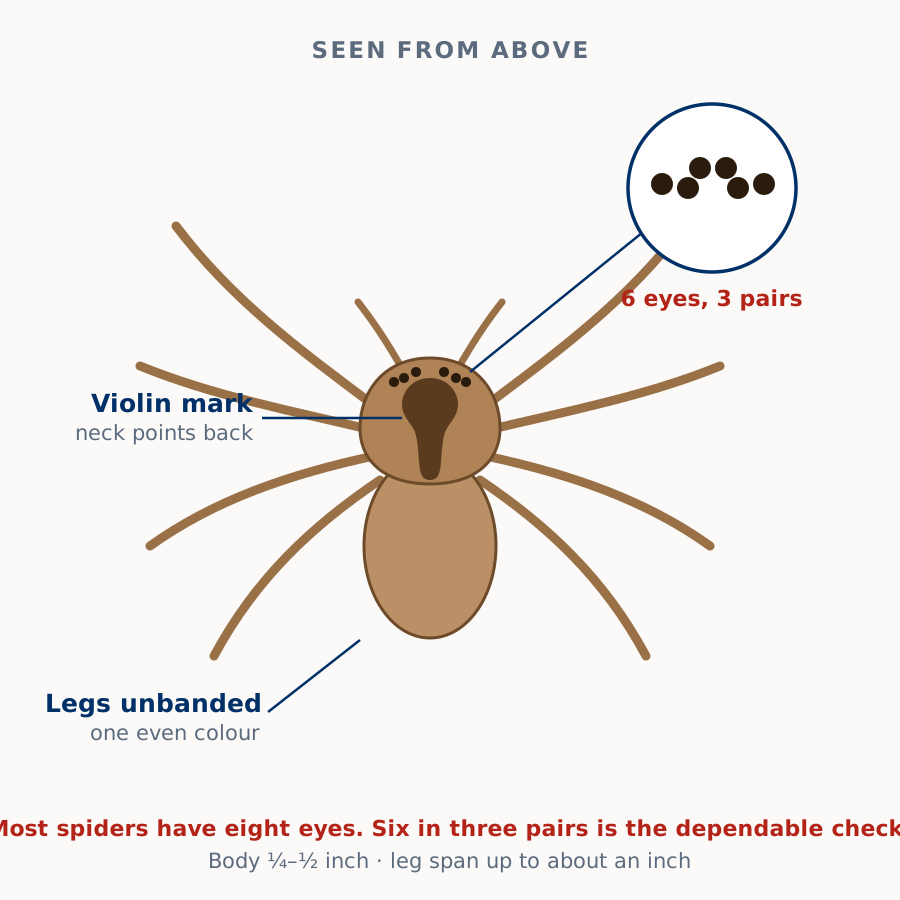
- Six eyes arranged in three pairs — most spiders have eight. This is the dependable check.
- A darker violin-shaped mark on the front body section, neck pointing backwards
- Uniformly coloured legs with no stripes, spines or bands
- Fine, irregular webbing used for retreat rather than catching prey
What it gets mistaken for
Most people arrive at a pest name by ruling things out. These are the ones that genuinely look similar, and the detail that separates them.
Where you will find it
- Undisturbed storage — boxes, wardrobes, under beds
- Garages, attics and sheds, particularly in cardboard
- Behind furniture that has not been moved in months
- Inside stored clothing, shoes and gloves
Signs it is already there
You will nearly always see the evidence before you see the pest itself.
- Irregular wispy webbing in undisturbed corners
- Shed skins in storage areas
- Sightings concentrated where things are rarely moved
Medically significant. Can cause injury. Seek medical attention if you are bitten or stung.
Why it is harder to deal with than it looks
They live where nobody looks, so a spray programme aimed at open surfaces misses them entirely. Spiders also pick up comparatively little residual product, which makes general spraying a weak tool against them.
What actually works
Reduce undisturbed clutter, especially cardboard — plastic bins with lids are markedly less hospitable. Shake out stored clothing and shoes. Wear gloves when moving stored boxes. Keep beds away from walls and do not store things underneath. Sticky monitors placed along walls are the usual way to gauge how many are actually present.
Common questions
How do I tell a brown recluse from a wolf spider?
Wolf spiders are larger, hairier, patterned, and have eight eyes including two very large forward-facing ones. They are frequently killed in mistake for recluses.
How do I tell a brown recluse from a cellar spider?
Cellar spiders have extremely long thin legs and a tiny body, and hang in loose webs.
Where are brown recluse usually found in a home?s
Undisturbed storage — boxes, wardrobes, under beds Garages, attics and sheds, particularly in cardboard Behind furniture that has not been moved in months.
Is a brown recluse dangerous?
One of two spiders of genuine medical significance in Texas. They are reclusive and not aggressive, and bites are far less common than people assume. If you believe you have been bitten, seek medical attention and take the spider with you if you safely can.
Identification guidance only. Under Texas law, applying pest control treatments for hire requires a licence from the Texas Department of Agriculture. This page describes what a pest looks like — it is not a diagnosis of your property or a treatment recommendation for it.